
Articles
Creating Family-friendly Workplaces in Singapore
7 December 2023
Topic
Wage Flexibility
Following the rapid modernisation and economic growth of the past century, developed countries are starting to notice a downward trend in birth rates.

Low birth rate: A common phenomenon in developed countries
This is particularly true in East Asian countries, with Taiwan, South Korea, Singapore, Hong Kong and Macau claiming the top spots for countries with the lowest fertility rate in 2023.
When asked for the reasons they do not wish to have children, many women shared similar concerns, including the fear of having to give up their careers to raise children. With falling birth rates and higher life expectancies, these countries are now faced with the problem of an ageing population. The result is a heavier burden on the younger generation, both when it comes to finances and caregiving responsibilities.
Sources:
https://www.statista.com/statistics/268083/countries-with-the-lowest-fertility-rates/ (opens in new tab)
https://www.dw.com/en/east-asia-grapples-with-an-aging-society/a-64967479 (opens in new tab)
Singapore is facing a record low total fertility rate
The latest recorded resident total fertility rate (TFR) in Singapore stands at 1.04 in 2022, which is significantly below the replacement rate of 2.1. The impact of this is multifold, increasing the old-age support ratio and putting a greater burden on the workforce to sustain economic growth while caring for ageing residents. A commonly cited reason by women and couples who choose not to have children in Singapore includes the difficulty of balancing work and family commitments.
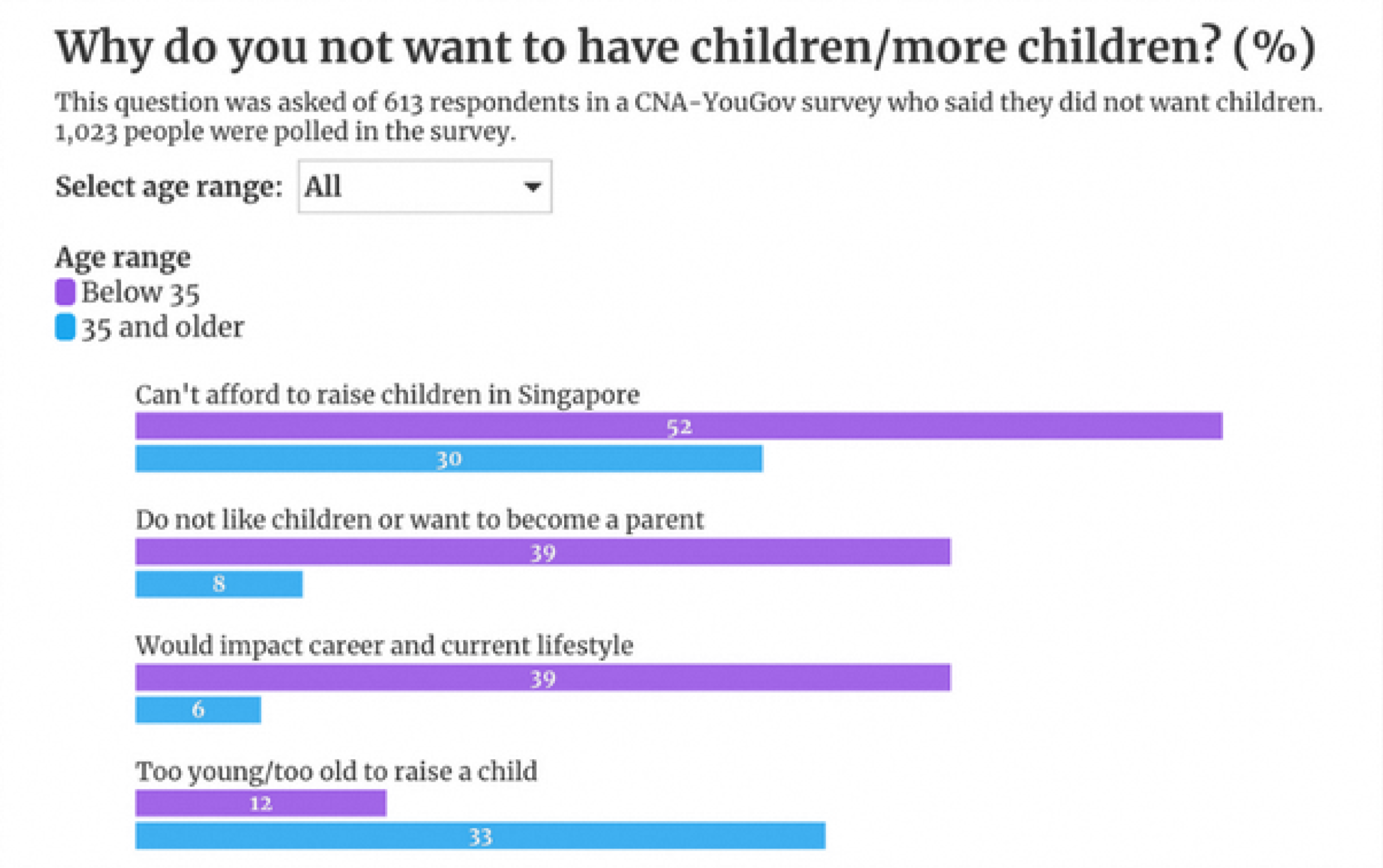
Singaporeans do want more children than they are having
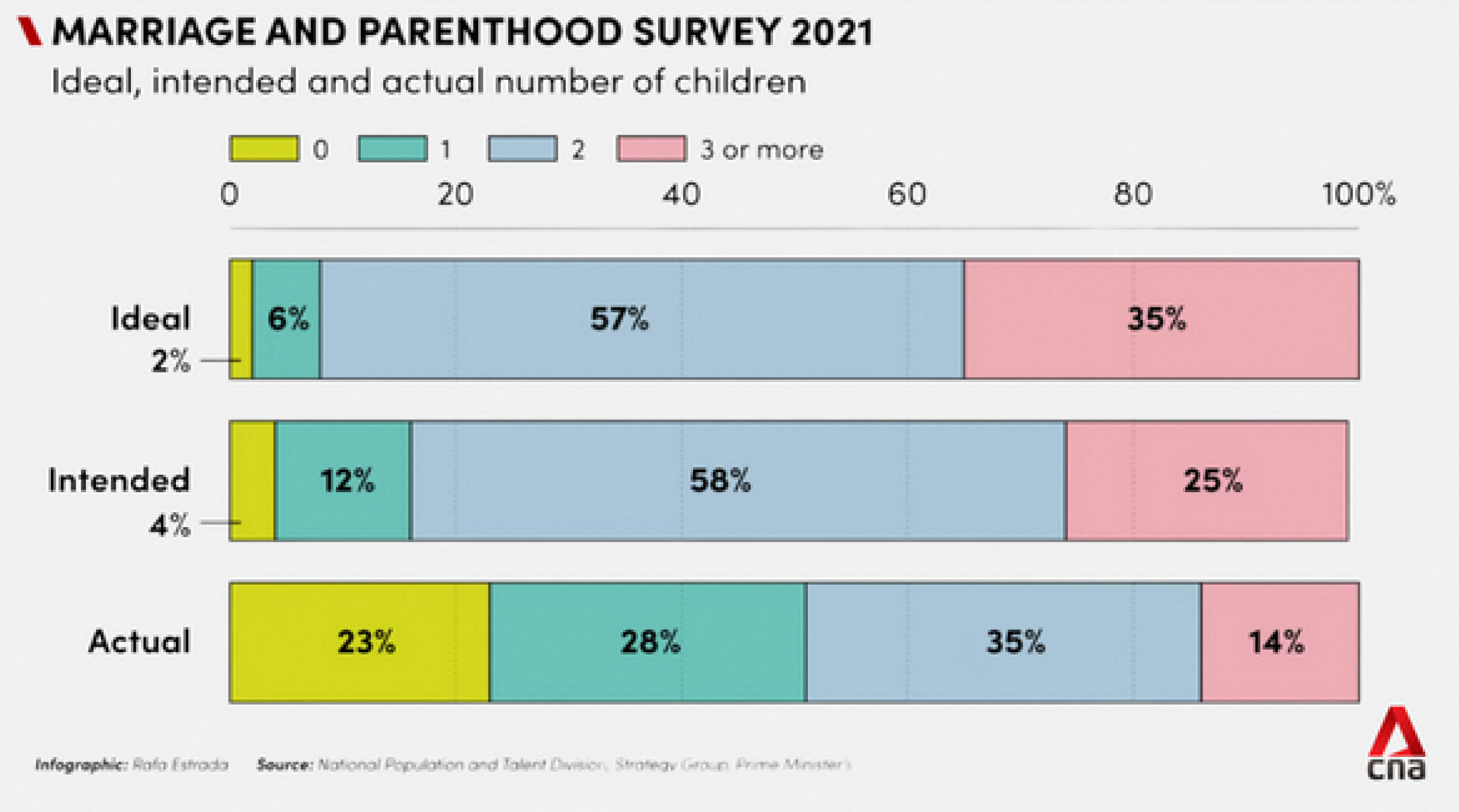
However, Singaporeans do desire to have more children — a strong indicator that implementing family-friendly workplace policies can help in achieving a higher birth rate.
According to the 2021 Marriage and Parenthood Survey by the National Population and Talent Division, a significant percentage of Singaporeans are having fewer children than they ideally want! Some reasons cited for this include a lack of caregiving support as well as not having enough time and energy to care for children.
Putting the motherhood penalty into perspective
The motherhood penalty is a sociological term used to refer to the halt in career prospects faced by working women who choose to start a family. The impacts of this phenomenon include:
Lower wages
Slower career growth
Increased difficulty in getting hired
These challenges can be attributed, in part, to the perception held by employers that working mothers are less dedicated to their jobs as their schedules revolve around their children.
What is being done in Singapore to ensure greater support for mothers?
In his Budget 2023 speech, Deputy Prime Minister Lawrence Wong announced that the following measures will be adopted:
Doubling the duration of paid paternity leave from two to four weeks, for fathers with children born from Jan 1, 2024.
Doubling each parent's entitlement to unpaid infant care days from 6 to 12.
It is hoped that these measures will have the effect of encouraging more couples to have children without having to worry too much about balancing work and family commitments. At the same time, this will provide women with more incentive to remain in the workplace after becoming mothers.

Retaining mothers in the workplace
Across borders, it is widely acknowledged that a larger workforce is linked to higher economic growth and GDP. Therefore, it is in the best interests of nations to retain mothers in the workplace. To do this, maternal and pregnancy discrimination must be addressed to ensure that working mothers can receive the support they require.
As women make up half the population, retaining mothers in the workplace will ensure that employers have a larger pool of talent to leverage on. Some ways in which employers can create a family-friendly workplace include allowing flexible work arrangements as well as providing parental leave and caregiving benefits.

Achieving successfully family-friendly workplaces
In fact, 90% of respondents of the 2021 Marriage and Parenthood Survey mentioned that flexible work arrangements will make or have made it easier for them to start a family.
With this in mind, achieving successful family-friendly workplaces in Singapore becomes a much more actionable business. When employers work closely with governmental measures to attract and retain mothers in the workplace, everyone benefits.
Find out more here about how the provision of flexible work arrangements and non-statutory leaves can create a more desirable working environment!
Subscribe to our newsletter (opens in new tab)