
Articles
Top Three Takeaways from the Report on Wage Practices 2022
5 July 2023
Topic
Wage Flexibility
Wage situation improved considerably amidst continued post-COVID economic recovery.

2022 saw an overall increasing trend in the proportion of profitable firms as well as among employers who raised their employees' wages. However, wage increases are likely to moderate in 2023 due to inflationary pressures and economic slowdown.
As wage increase is linked to a rise in productivity and employee engagement, employers are encouraged to leverage on government programmes and the guidelines set out by the National Wages Council (NWC) to ensure that wages and working conditions remain favourable to employees.
#1 Proportion of profitable establishments rose for the second year running
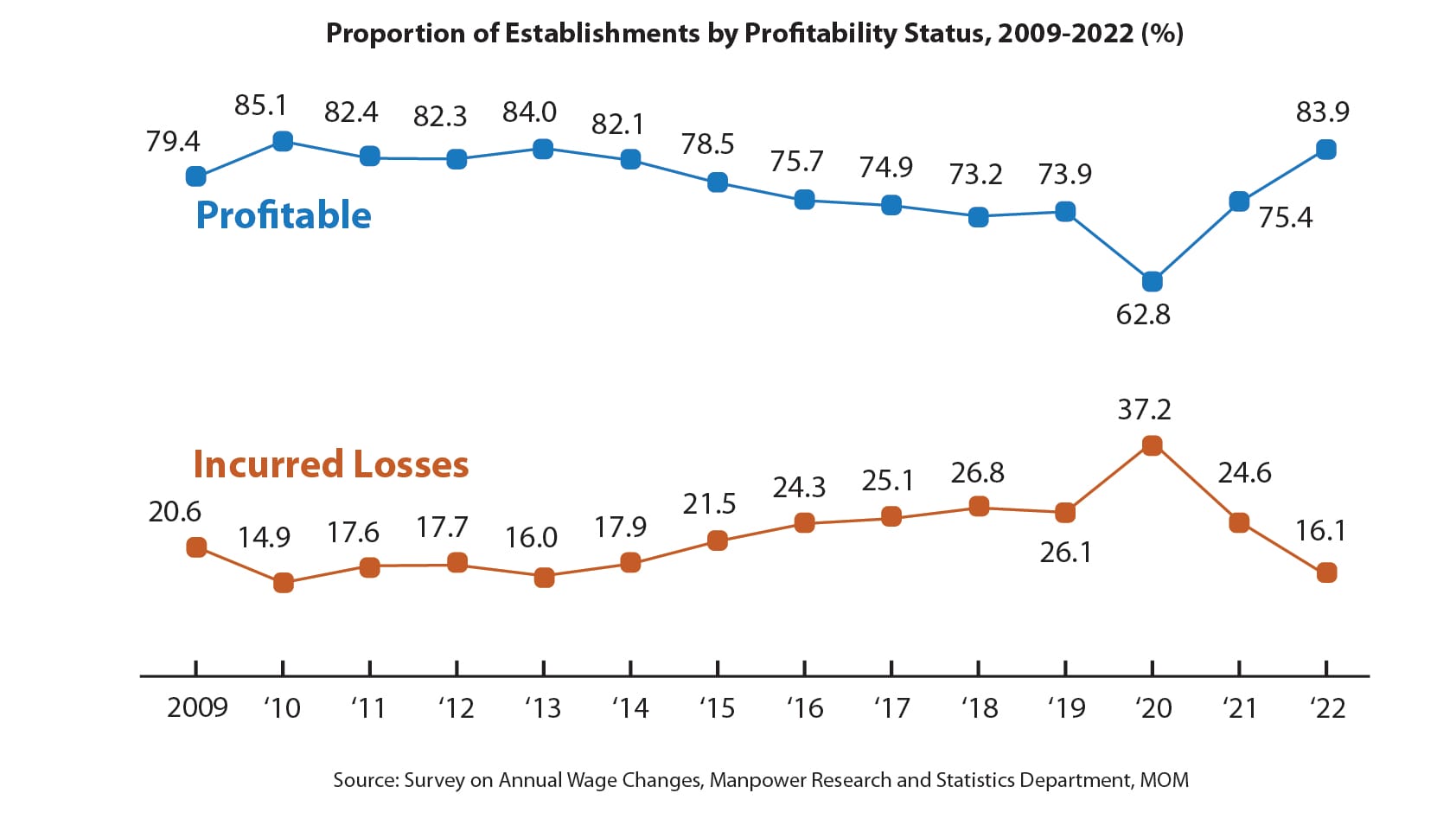
While only 3 in 4 establishments were profitable in 2021 (75.4%), the proportion of profitable establishments rose further to 83.9% in 2022, alongside continued economic growth.
This increase had a direct impact on the proportion of firms that were more financially able to give employees higher wages.
#2 Higher total wage growth was seen across all industries
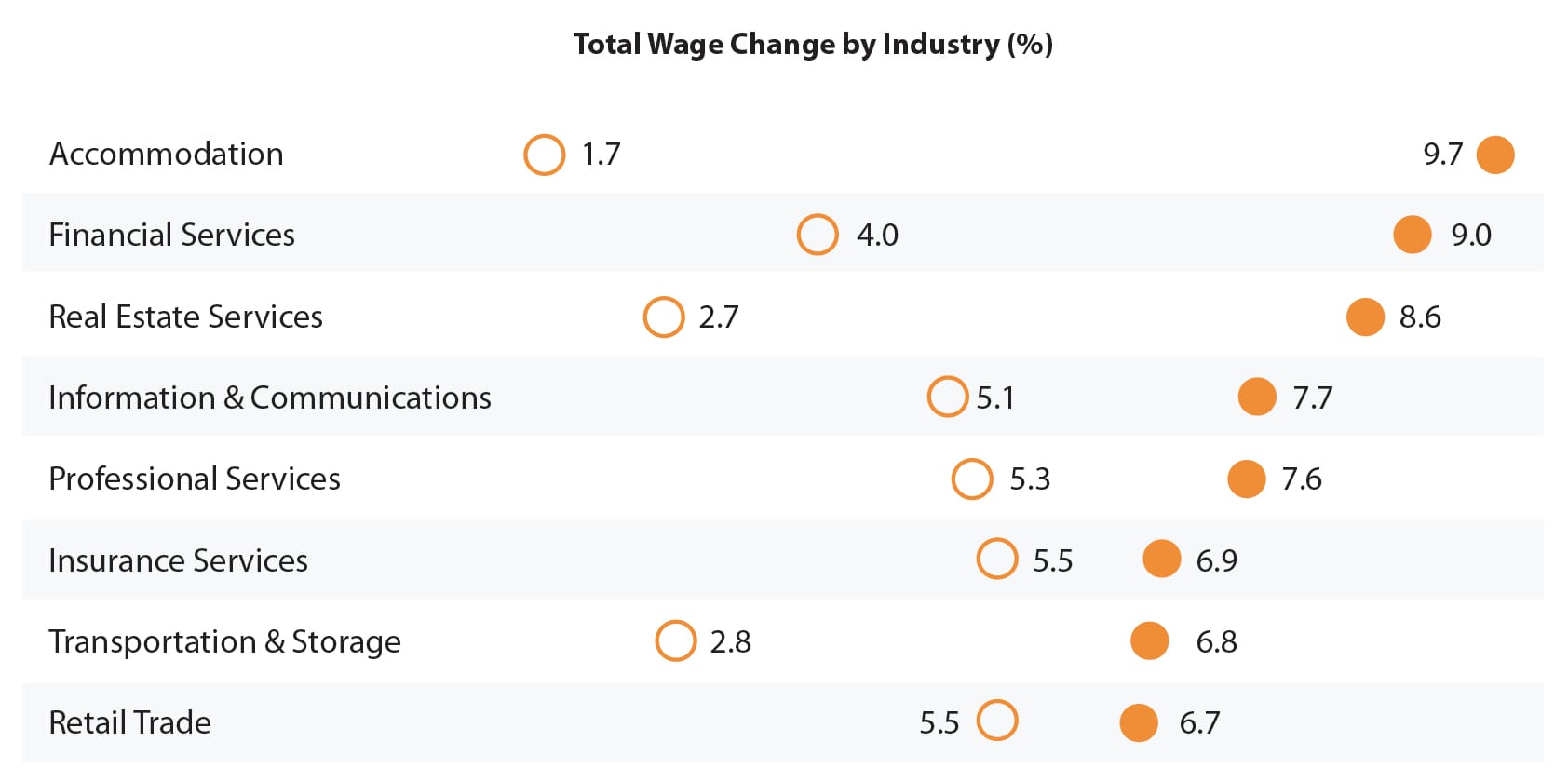
While higher total wage growth was seen across all industries, this trend was particularly significant for the Accommodation and Retail Trade industries.
As COVID restrictions were lifted and international borders opened up, business activities picked up in these industries. The higher demand for labour, in turn, spurred employers to make wage conditions more attractive in order to entice and retain workers.
In a tight labour market, it is in the best advantage of firms to retain existing employees. One way of achieving this is by ensuring that wage increases are put in place to keep pace with the market.
When wages are attractive, employers can also expect a larger pool of candidates willing to take over any vacancy that opens up. This, in turn, discourages employees from putting in poor performance as they know they can easily be replaced at any time.

#3 Nearly 3 in 4 businesses gave wage increases in 2022
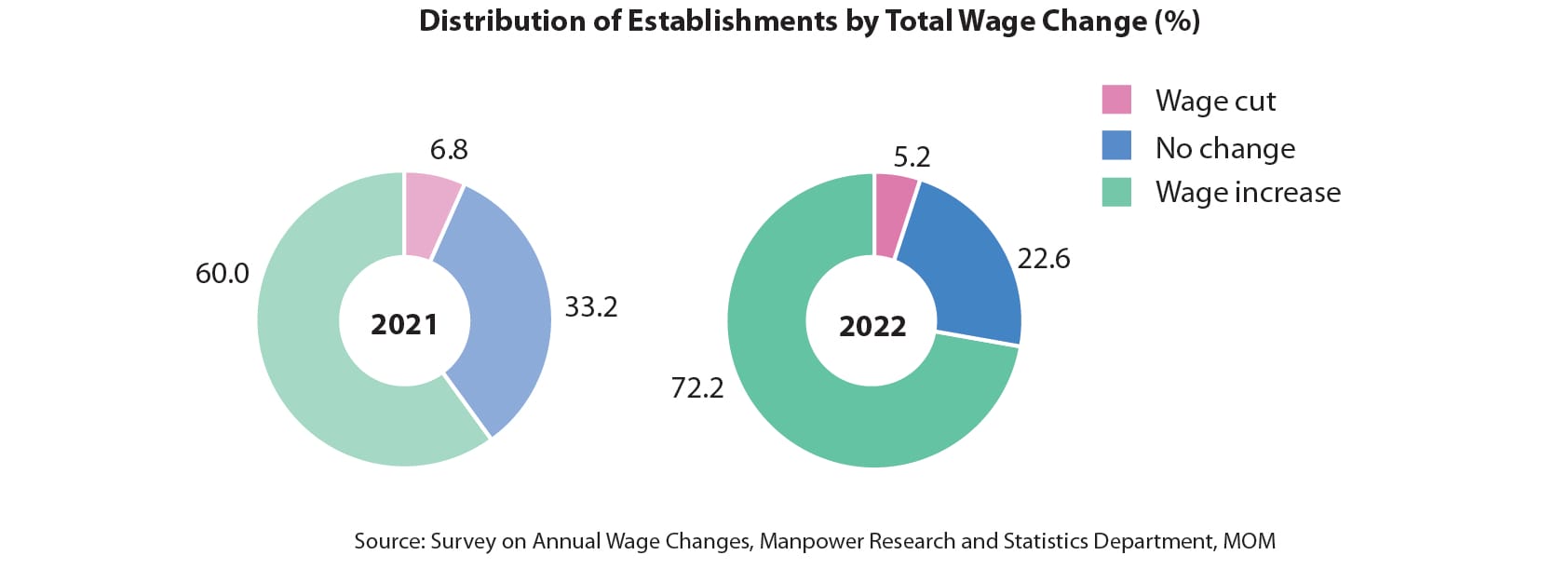
Compared to the 60.0% in 2021, the proportion of establishments that offered wage increases went up to 72.2% in 2022. As business activities picked up in 2022 with post-COVID recovery efforts, employers had to find ways to retain workers in light of voluntary employee departures.
Wage increases can bring up employee retention rates
Putting in place wage increases to keep trend with market conditions can aid in employee retention. This also comes with the added benefit of enhanced loyalty to the company when employees are satisfied. Employers are well aware of this fact – according to a survey by the Singapore Human Resources Institute (SHRI), 57% of local employers recognise that a high employee turnover rate has a negative impact on overall performance!
Do you know the true cost employee turnover can have on a business? A study by the US Department of Labour has revealed that it costs 33% of a new candidate's annual salary to replace an employee who has left the job! This includes the cost of training as well as that of lost productivity.
Source: https://hrmasia.com/the-cost-of-employee-turnover/ (opens in new tab)
Wage growth is expected to moderate in 2023
Although 2022 has been a good year for wage growth, this is expected to moderate in 2023 against the backdrop of the global economic slowdown and a volatile business environment. Despite this, firms are encouraged to continue offering progressive employment practices by adopting the latest NWC guidelines such as the Flexible Wage System (FWS).

For more information, please refer to the full Report on Wage Practices 2022 report.
Subscribe to our newsletter (opens in new tab)