
Absolute vs Relative Change
Understanding the concepts of absolute and relative change, their uses and limitations
Last updated on 1 November 2026
Understanding absolute and relative change
When analysing labour market indicators, we are often interested in how they changed over time.
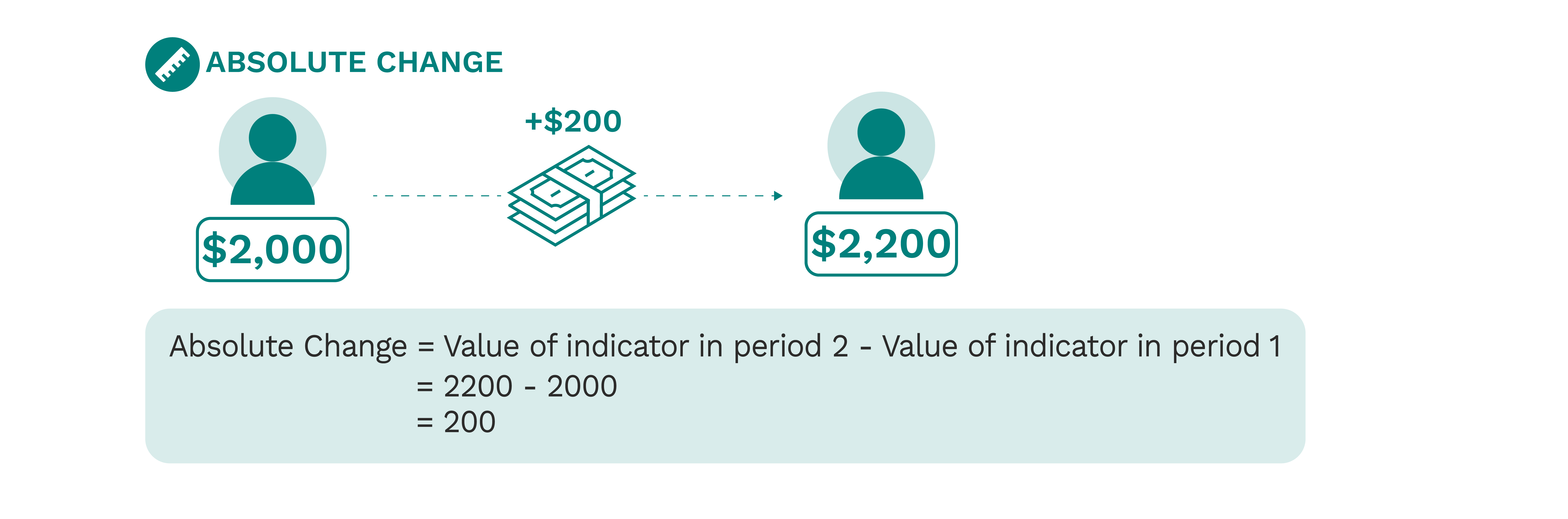
Absolute change refers to the simple difference in the indicator over two periods in time.
Suppose an employee receives a $200 raise in monthly wages in June compared to May.
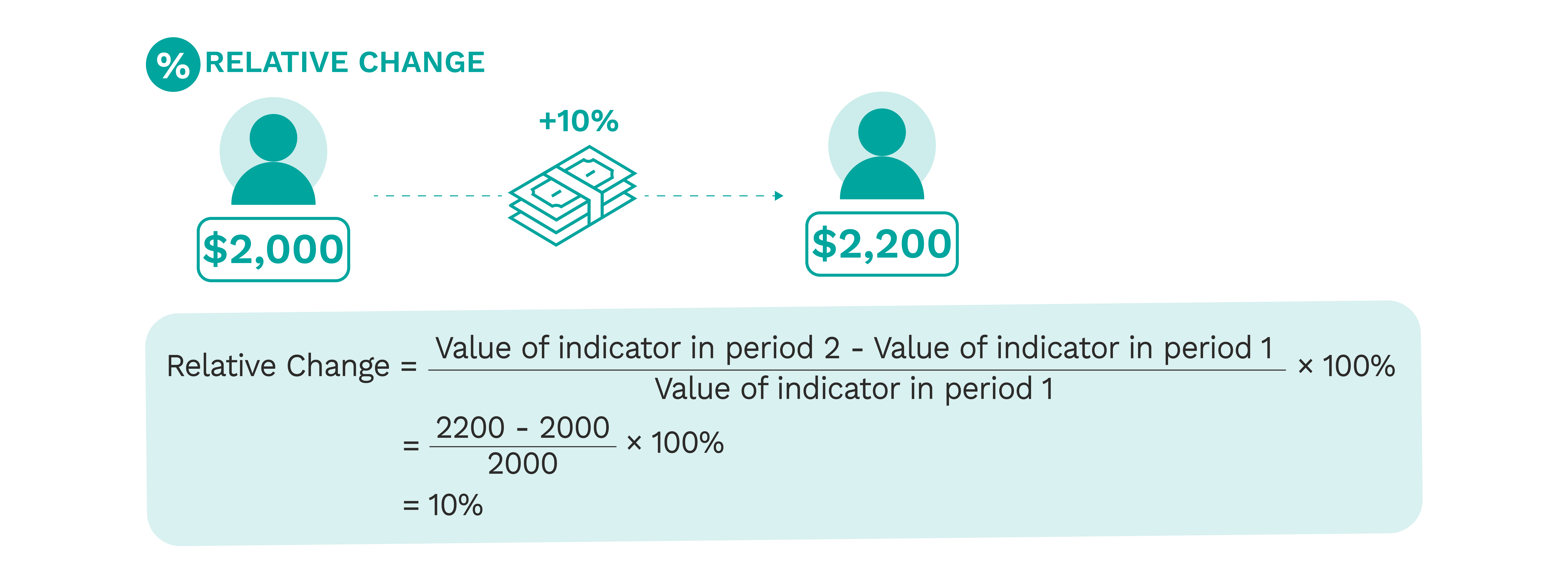
Relative change expresses the absolute change as a percentage of the value of the indicator in the earlier period.
The concepts of absolute and relative change also apply to indicators measured as percentages, such as unemployment rate. For such indicators,
Absolute change is expressed in percentage points and is calculated by subtracting the indicator value in period 1 from the corresponding value in period 2. Relative change is expressed as the percentage change relative to the indicator's value in period 1.
Calculating Absolute and Relative Change
Example 1
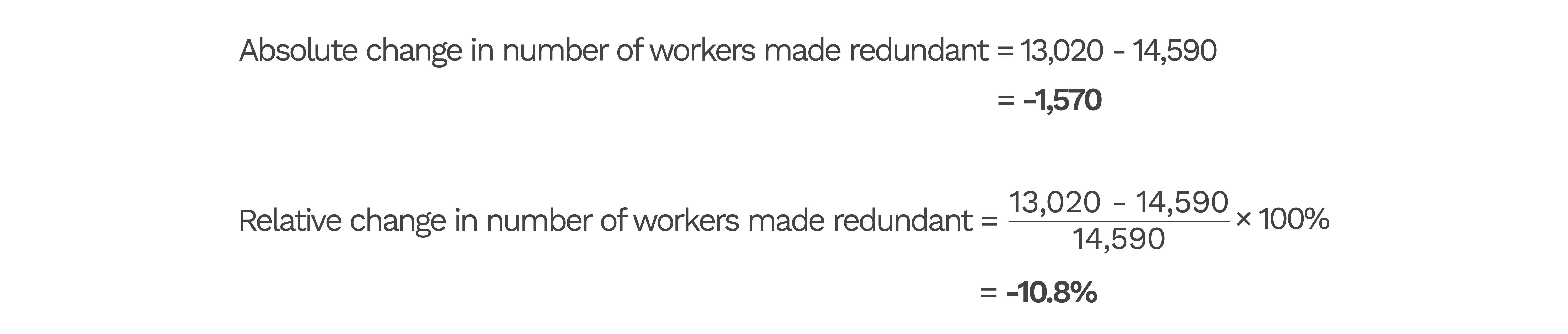
13,020 workers were made redundant (i.e. retrenched or prematurely released from their contracts) in 2024, compared with 14,590 in 2023.
Example 2
Total employment rose by 59,800 in 2024 from the level of 3,986,400 in December 2023.
Here, the total employment change of 59,800 is the absolute change in total employment in 2024.

Example 3
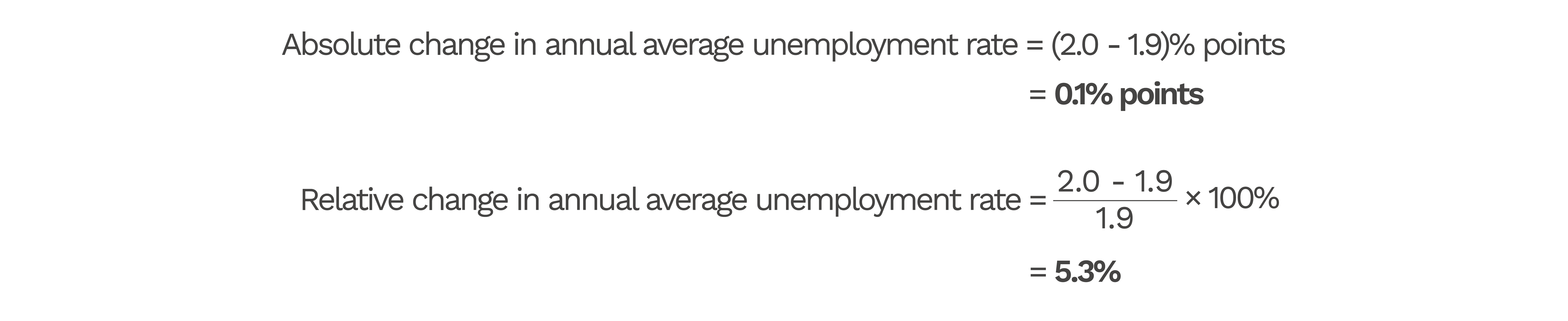
The annual average resident unemployment rate was 1.9% in 2023 and 2.0% in 2024.
Uses of absolute vs relative change
The concepts of absolute and relative change complement each other in helping us understand how a labour market indicator has changed over time.
Given the same absolute change, the relative change is greater in magnitude if the initial value is smaller.
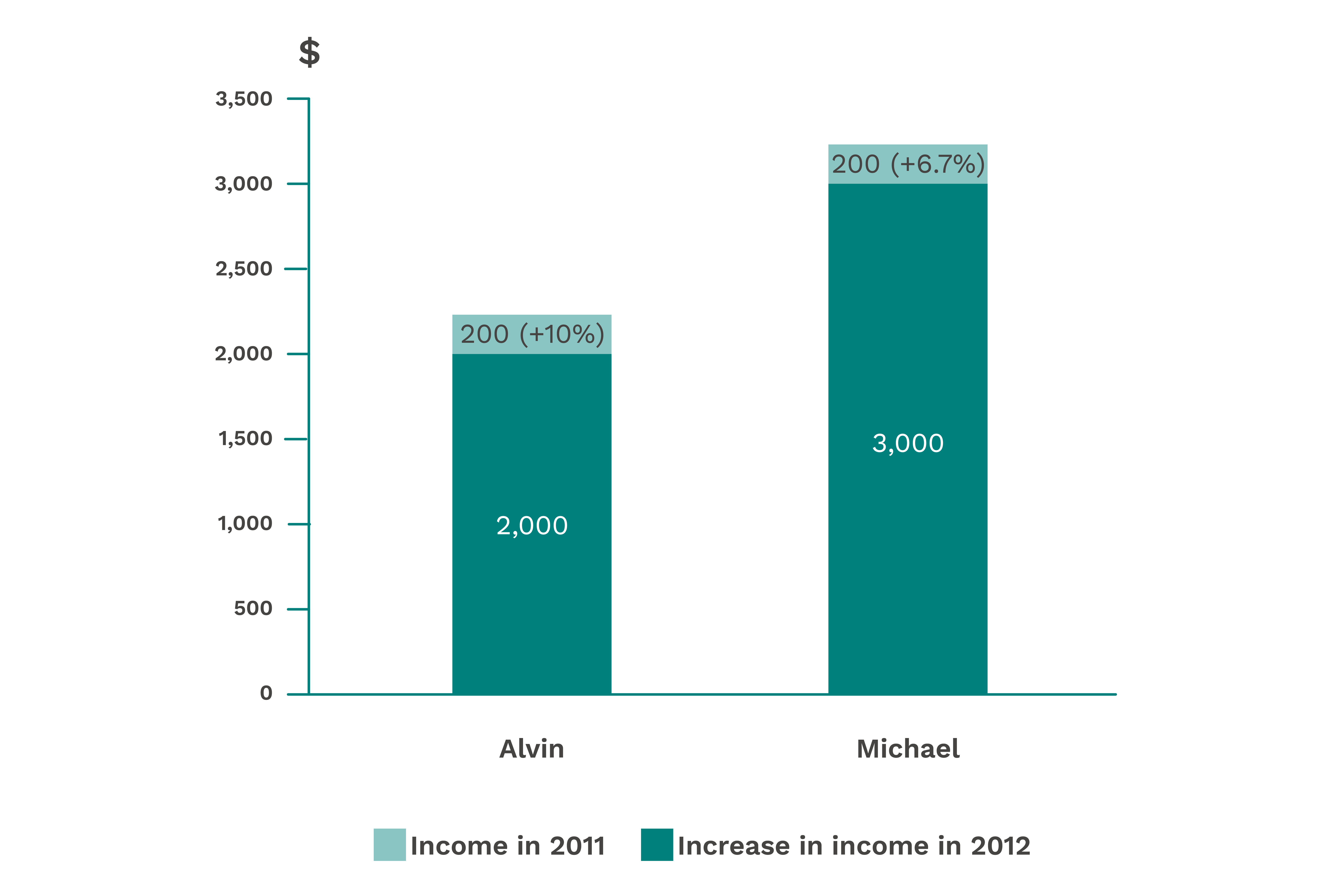
Suppose Alvin and Michael each received a salary increment of $200 in 2024. Although both received the same absolute change in salary of $200, the relative increase was higher for Alvin (+10%) compared to Michael (+6.7%). This is because Alvin's original income ($2,000) was lower than Michael's income ($3,000).
Refer to the following chart.
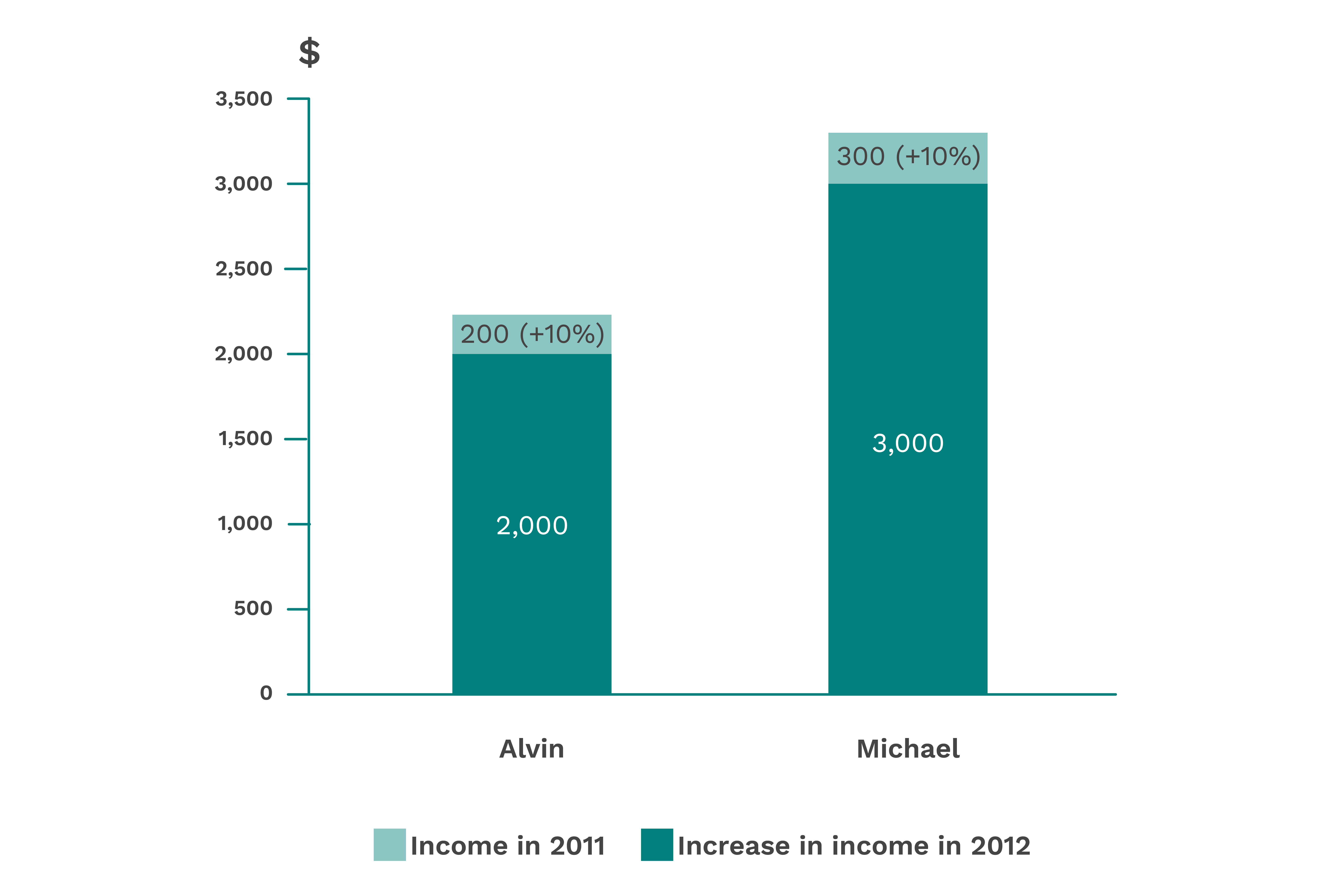
On the other hand, suppose both men's incomes increased by 10% in 2024. While the relative change in income was the same for both, the absolute increase was larger for Michael ($300) than for Alvin ($200), as Michael’s income in 2023 ($3,000) was higher than Alvin’s ($2,000).
Absolute and relative change are useful for different purposes.
Absolute change is particularly useful when resource requirements are closely tied to the number of people served.
For example, an agency that provides employment assistance would be interested in the absolute change in the number of people seeking job assistance over time. This helps the agency forecast demand, assess staffing and operational needs, and estimate the additional funding required to support future operations.
On the other hand, relative change may be more useful for assessing the extent to which a labour market indicator has changed, especially when the value of the indicator differs across segments of the population.
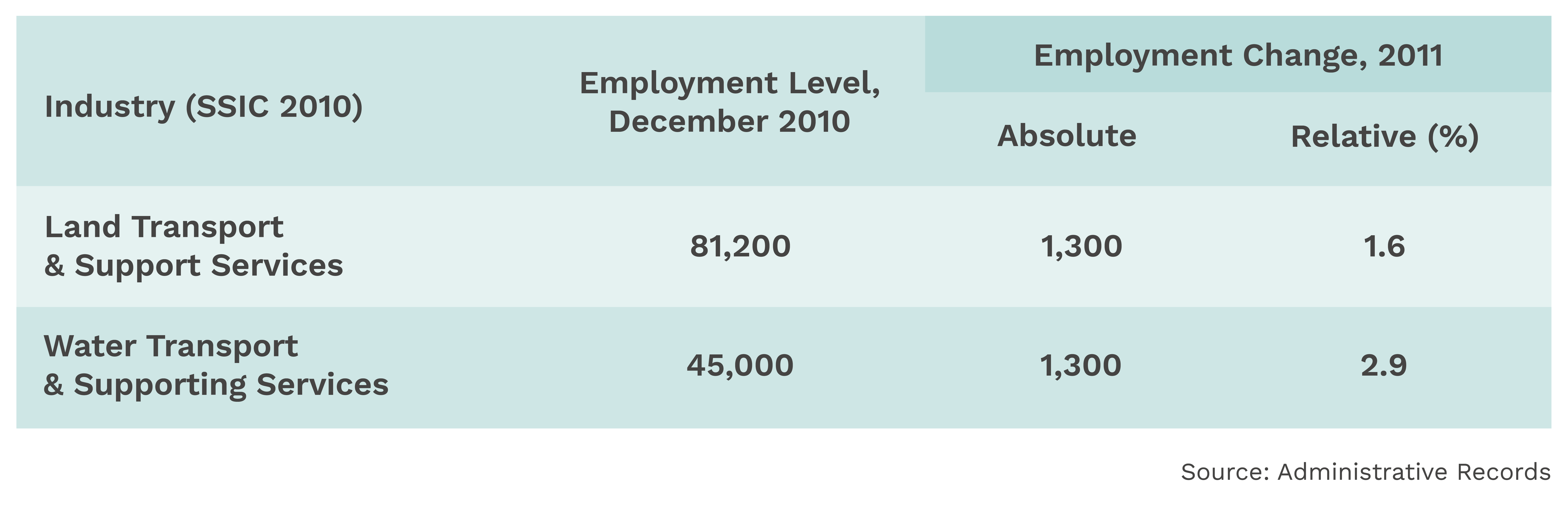
For example, the education industry employs more workers than the cleaning and landscaping industry, and yet the absolute change in employment for both industries in 2024 was the same.
The impact of this increase is likely to be greater for the cleaning and landscaping industry, which had a smaller employment size. This is more evident when examining the relative employment change, where employment for cleaning and landscaping (2.4%) is higher compared to education services (1.7%).
Limitations
In analysing relative change, it is important to note that indicators with extremely low values can produce large relative changes even when the absolute change is small.
For example, if a firm employed 20 workers in their first year, but only 10 workers in second year, the relative change in employment is -50%.
If we solely focus on the relative change, we may conclude that there is a large decrease in employment, and that considerable resources may be needed to support affected workers.
However, this is not necessarily the case, given that the decrease in the number of workers in this firm is small.
In short, an indicator with a large absolute change may not necessarily have a large relative change, and vice versa. Hence, when analysing relative change across different groups, it is useful to consider the absolute change or the initial value from which the changes were computed to reach a more balanced assessment on how the indicators have changed over time.
Absolute vs relative change for data in percentages
When analysing indicators expressed as percentages, it is important to distinguish between absolute change and relative change.
Consider the following statement:
“The unemployment rate increased by 0.2% from 2.0% to 2.2%.”
The concepts of absolute and relative change have been confused in the statement above. The increase in the unemployment rate of 0.2 is an absolute change:
2.2% – 2.0% = 0.2 percentage points
Because the increase is measured as the difference between two percentages, it should be expressed in percentage points, not per cent.
To derive the relative change, the absolute change is divided by the initial value and multiplied by 100:

Therefore, the unemployment rate increased by 0.2 percentage points in absolute terms, or 10% in relative terms.