
Mode
Understanding the concept of the mode, its uses and limitations
Last updated on 1 November 2026
Understanding mode
The mode is the value or category that occurs most frequently in a data set.
For numerical data, such as employees' ages or wages, the mode is the number that appears most often.
For category data, such as a preferred job-search method, the mode is the choice that appears most often.
How to find the mode
Example 1: Job hunting
Suppose a recruiter would like to identify the most popular method of finding a job. The recruiter conducts an online survey among 15 friends who have found jobs and ask them how they found their jobs.
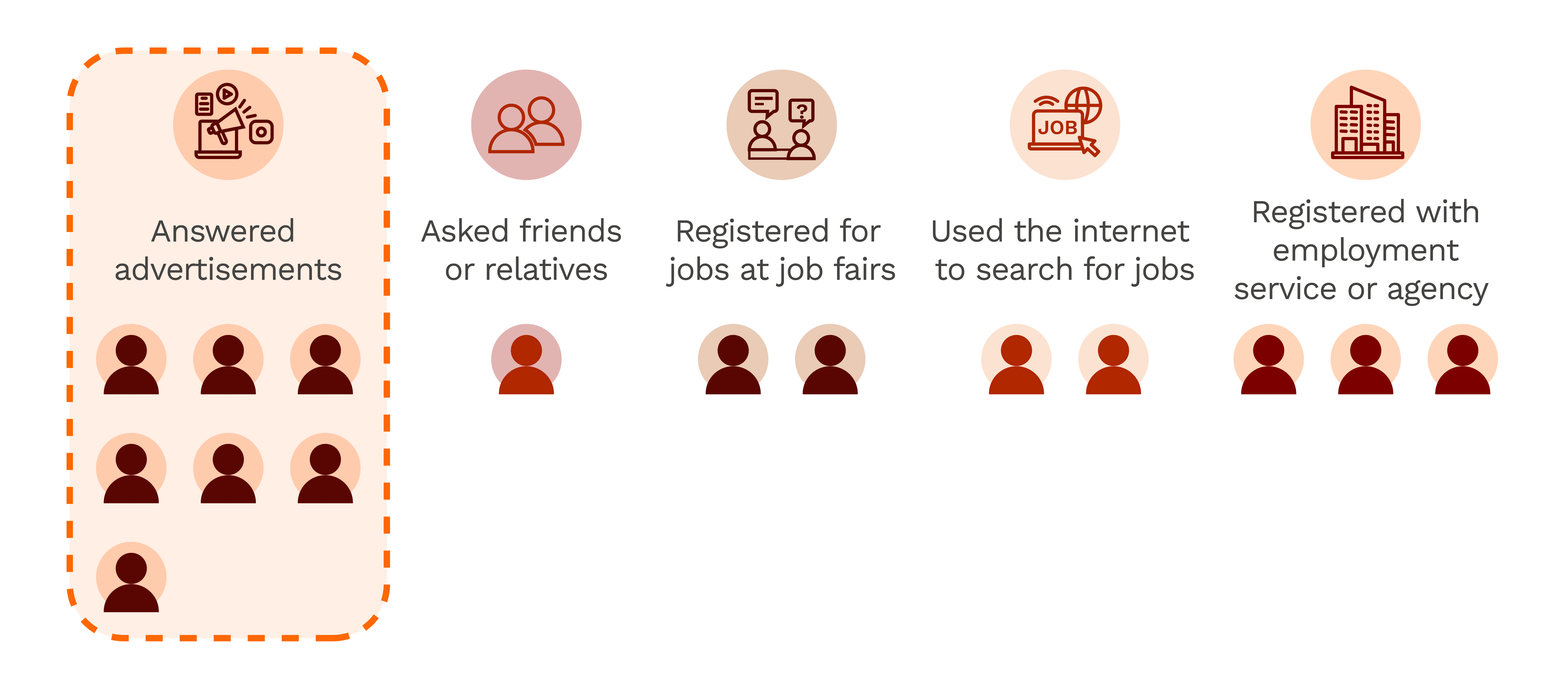
Of the five methods, "Answered advertisements" occurs most frequently, with 7 people selecting this response.
Therefore, "Answered advertisements" is the mode.
Uses of the mode
The mode can be used to identify the most frequently occurring value or category in a data set.
For example, in the job-hunting example above, 7 out of the 15 people surveyed found jobs by answering advertisements. As this was the most frequently reported method, answering advertisements is the mode.
Limitations
When no value clearly occurs more often than the others, the mode does not tell us much about what is typical in the data.
Example 2: Multiple modes in a flat distribution
Suppose each of the 20 employees in Company ABC is asked how many hours of training they completed during the year.
No answer is more common than another: one employee reported 7 hours, one reported 8 hours, one reported 9 hours, and so on. Because every answer appears only once, there is no single most common number of training hours.
Employee Training Hours of Company ABC
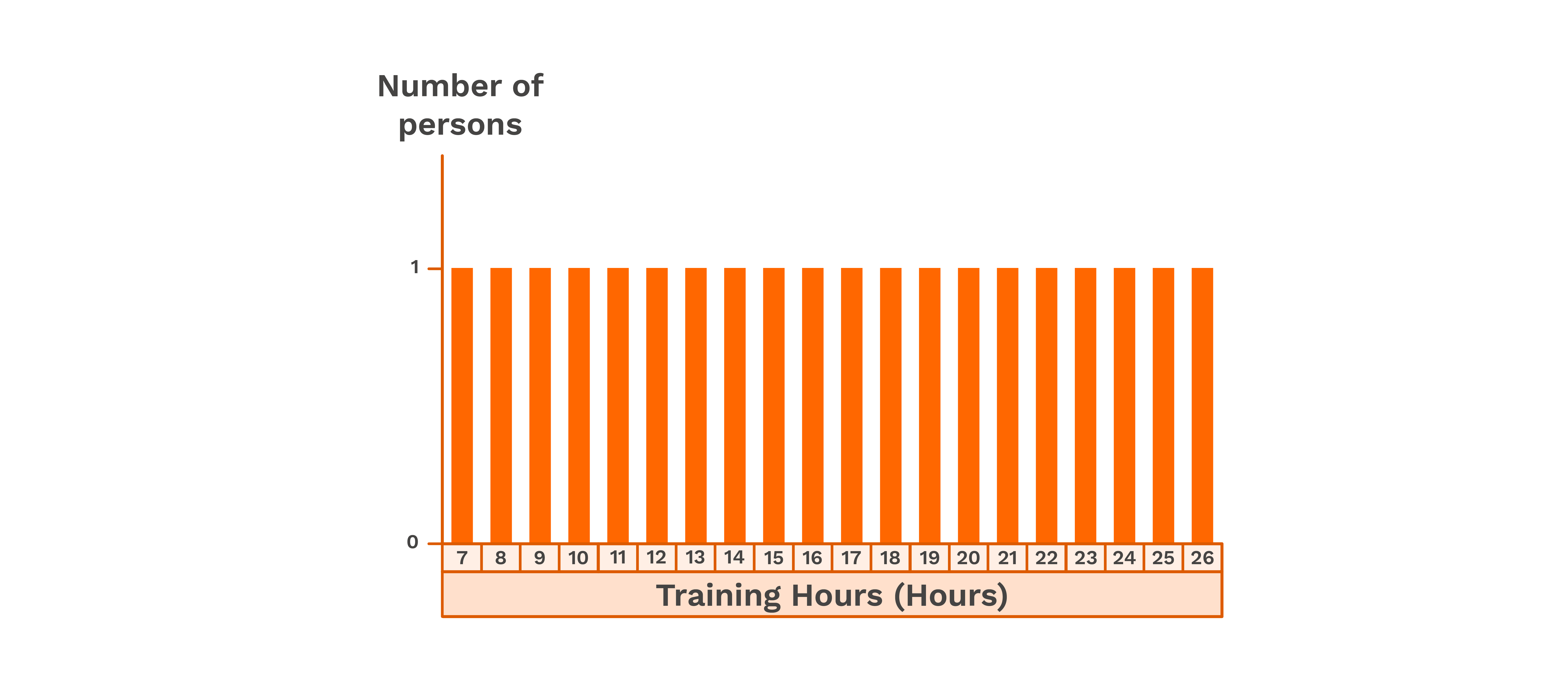
By the definition of the mode, every value from 7 to 26 hours is a mode, as each occurs with the same frequency.
In this case, the mode tells us that every number of training hours is equally likely and does not provide a meaningful indication of a typical value.
The mode also has another limitation: it may be far from the middle of the data, and a data set may have more than one mode.
Example 3: Modes at the extreme ends of a distribution
Suppose each of the 20 employees in another company, Company XYZ, is asked how many hours of training they completed.
In this example, 8 hours and 18 hours each occur four times, more frequently than any other value.
Training Hours of Employees of Company XYZ
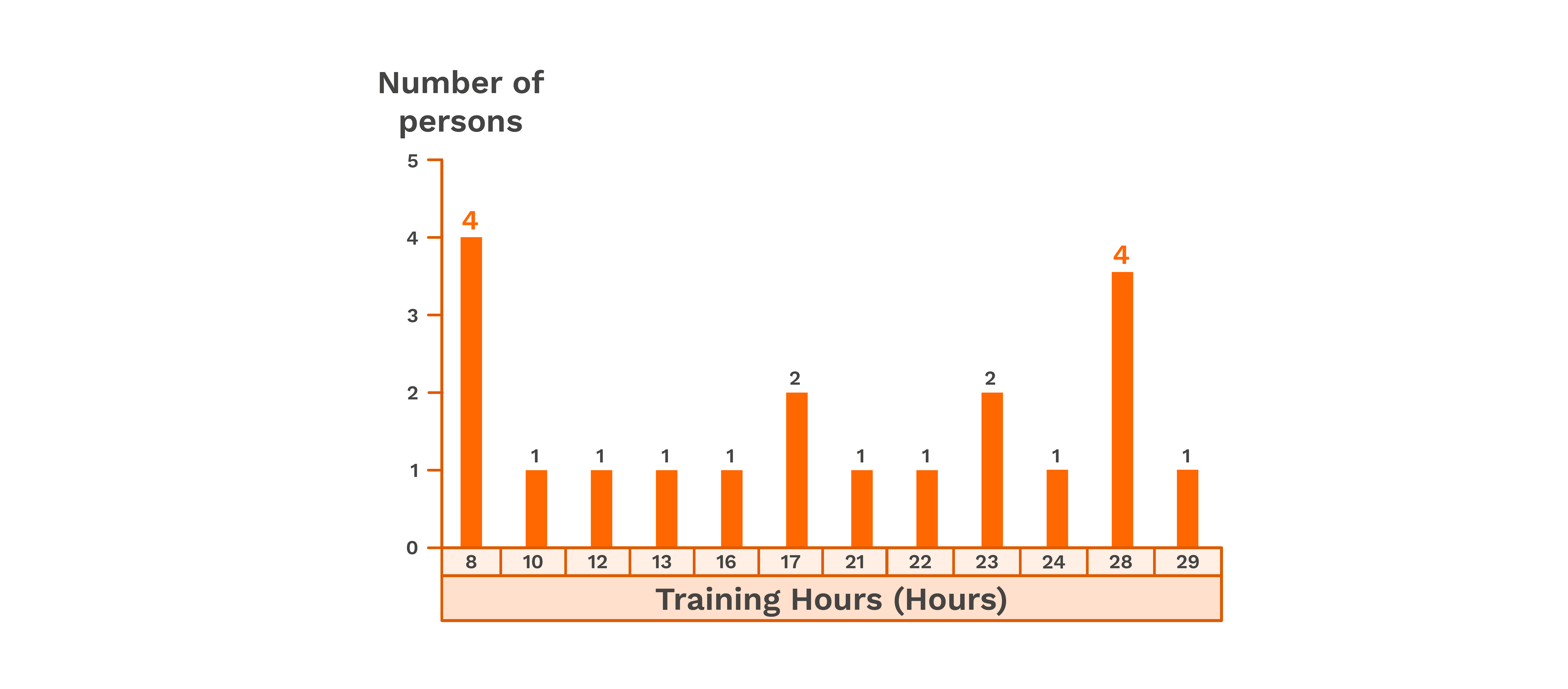
Therefore, this data set has two modes: 8 hours and 28 hours.
This example illustrates how the mode does not necessarily occur near the middle of a distribution and can occur at either or both tail ends of the distribution.