
Sample Reliability
Understanding the concept of sample reliability, its uses and limitations
Last updated on 1 November 2026
Understanding sample reliability
In a sample survey, we infer results about the target population by studying a representative subset of the population.
This can help us save resources but also has its limitations. Estimates based on the sample selected will generally differ from those of the entire population.
This extent of variation between estimates obtained from a sample and the true value is known as the sampling error. Take a look at the example below.
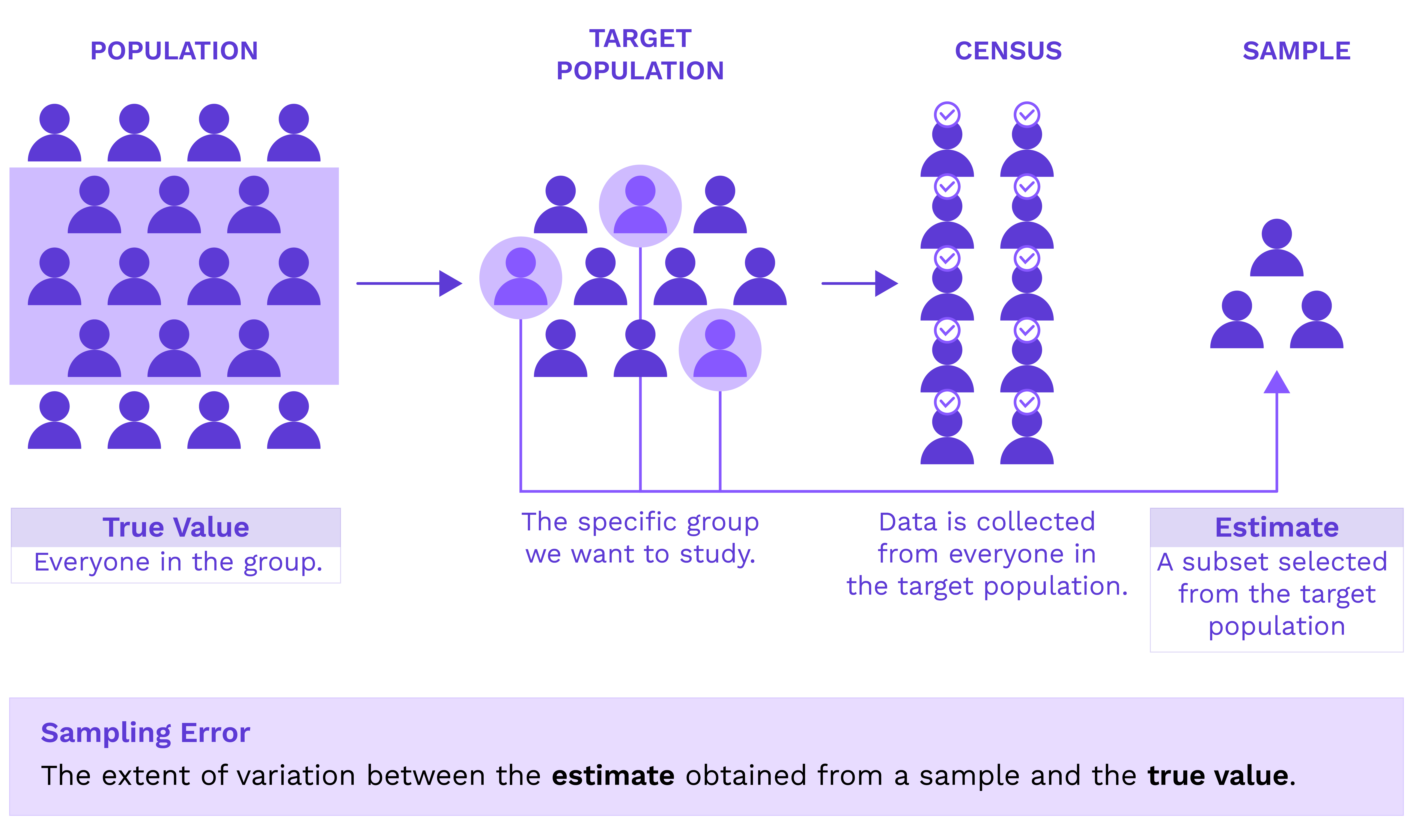
Factors influencing the sampling error include the:
sample design (e.g. how the training participants are selected for the survey),
sample size (e.g. the number of training participants to be interviewed),
estimation method (e.g. do we gross up the survey results to the population using only one or multiple expansion factors?),
variability of the population (e.g. does the income of the training participants differ widely?), and
characteristics studied (e.g. are there differences among those working in the Northern part of Coconut Island than those in the Southern part).
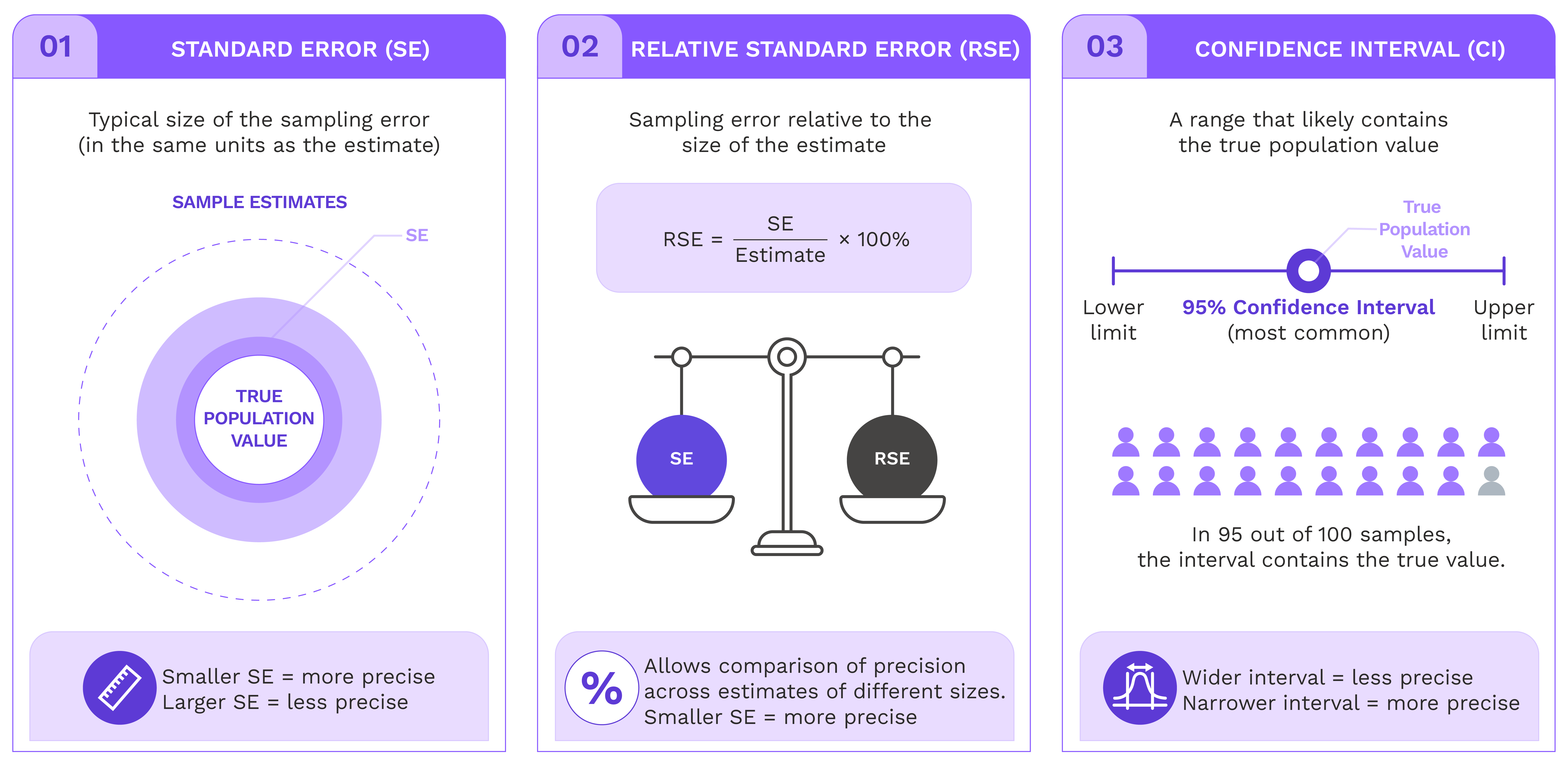
The reliability of survey estimates are commonly measured by a group of indicators, including the standard error, relative standard error and confidence interval.
Uses of terms
Limitations
Although these measures help quantify the reliability of data, they estimate only sampling errors. Besides sampling errors, the reliability of survey results is affected by non-sampling errors, which can result from:
varying interpretations of questions by respondents or interviewers,
inability or unwillingness of respondents to provide correct information, or
mistakes in recording, coding or processing.
Steps would have to be taken to reduce these errors, for example:
careful design of questionnaires,
training and supervision of interviewers, and
strict data processing controls.